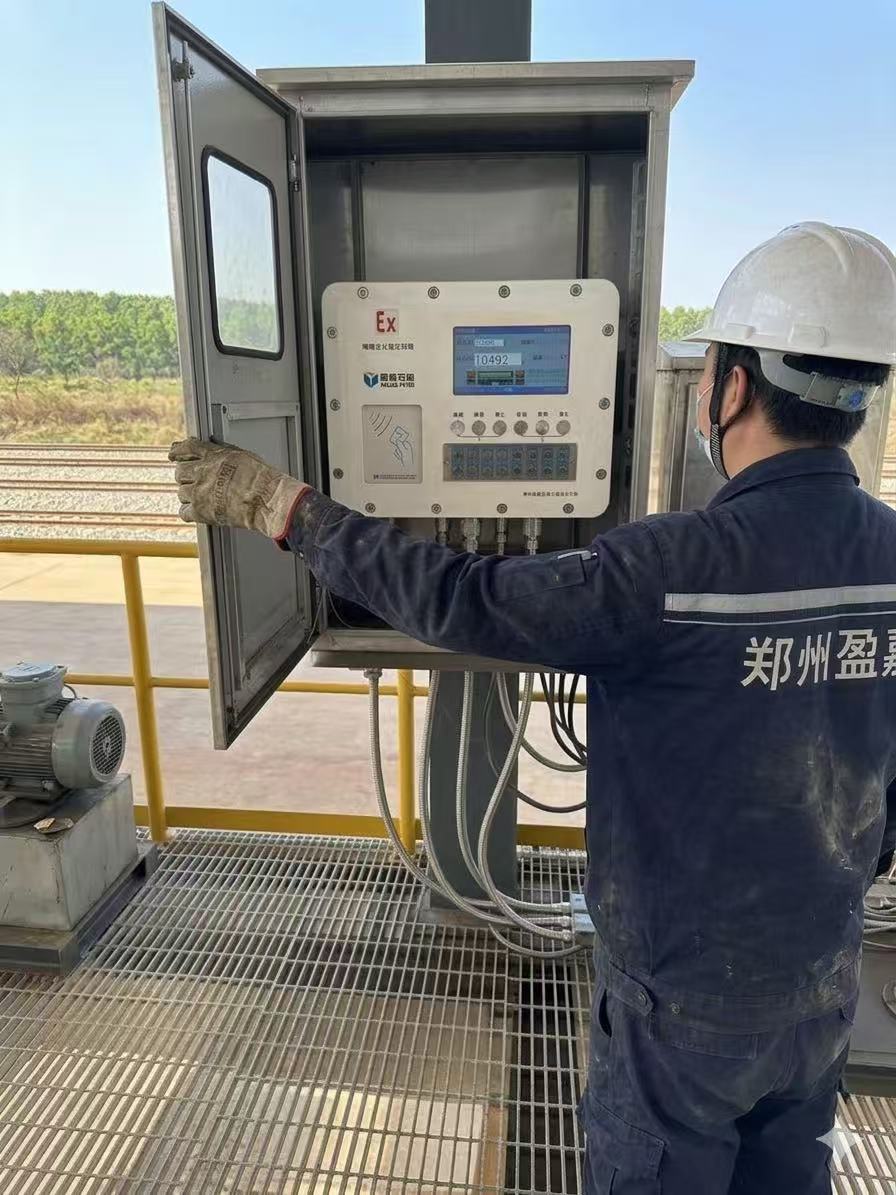
In an increasingly uncertain global environment, oil depots are no longer seen as simple storage and transfer facilities. During war, regional conflict, or geopolitical instability, they become essential nodes in maintaining fuel supply, operational continuity, and energy security.
When transportation routes are disrupted and external threats increase, oil depots must do far more than store fuel. They must remain safe, visible, controllable, and responsive under pressure.
For operators, terminal owners, and energy companies, this creates an urgent question: Is your depot prepared to operate safely in high-risk conditions?
Oil depots play a central role in the petroleum logistics chain. They connect refineries, truck loading stations, railway systems, ports, pipelines, and end users. In normal conditions, this position already makes them operationally important. In times of conflict, it makes them strategically critical.
The risks are not limited to direct damage. In reality, war and instability expose oil depots to a combination of physical, operational, and management challenges.
Oil depots handle flammable and explosive products every day. Tank farms, loading racks, pump skids, pipeline networks, and control rooms are all sensitive areas. Any external impact, nearby explosion, or infrastructure disruption may lead to leakage, fire, explosion, or cascading operational failure.
Because of the nature of the products involved, the consequences can be immediate, large-scale, and difficult to contain.
When roads, railways, ports, or shipping channels are affected by conflict, fuel movement becomes unstable. In this situation, oil depots are no longer just part of the supply chain — they become stabilizing points within it.
They must handle temporary storage pressure, emergency dispatching, changing loading priorities, and fast inventory coordination. Without reliable control systems, these demands can quickly overwhelm traditional manual workflows.
Conflict conditions often bring irregular working hours, more concentrated loading demand, tighter security requirements, and greater pressure on onsite decision-making. Under these conditions, even a small operational error can become a serious incident.
Processes such as grounding verification, overfill protection, gas detection, emergency shutdown, equipment interlocking, and operator authorization become more important than ever.
Modern oil depots depend on automation and digital visibility to maintain safe and efficient operations. If communication is interrupted, alarms are delayed, or control logic fails, response time is lost exactly when it matters most.
In high-risk environments, reliable automation is not a convenience. It is part of the depot’s core defense capability.
When external threats rise, adding more manual checks is not always enough. Oil depots need systems that can support safe operation even when the environment becomes unstable.
That means building a depot capable of:
This is where intelligent automation creates real value. The goal is not only to improve efficiency, but to reduce operational uncertainty and strengthen continuity.
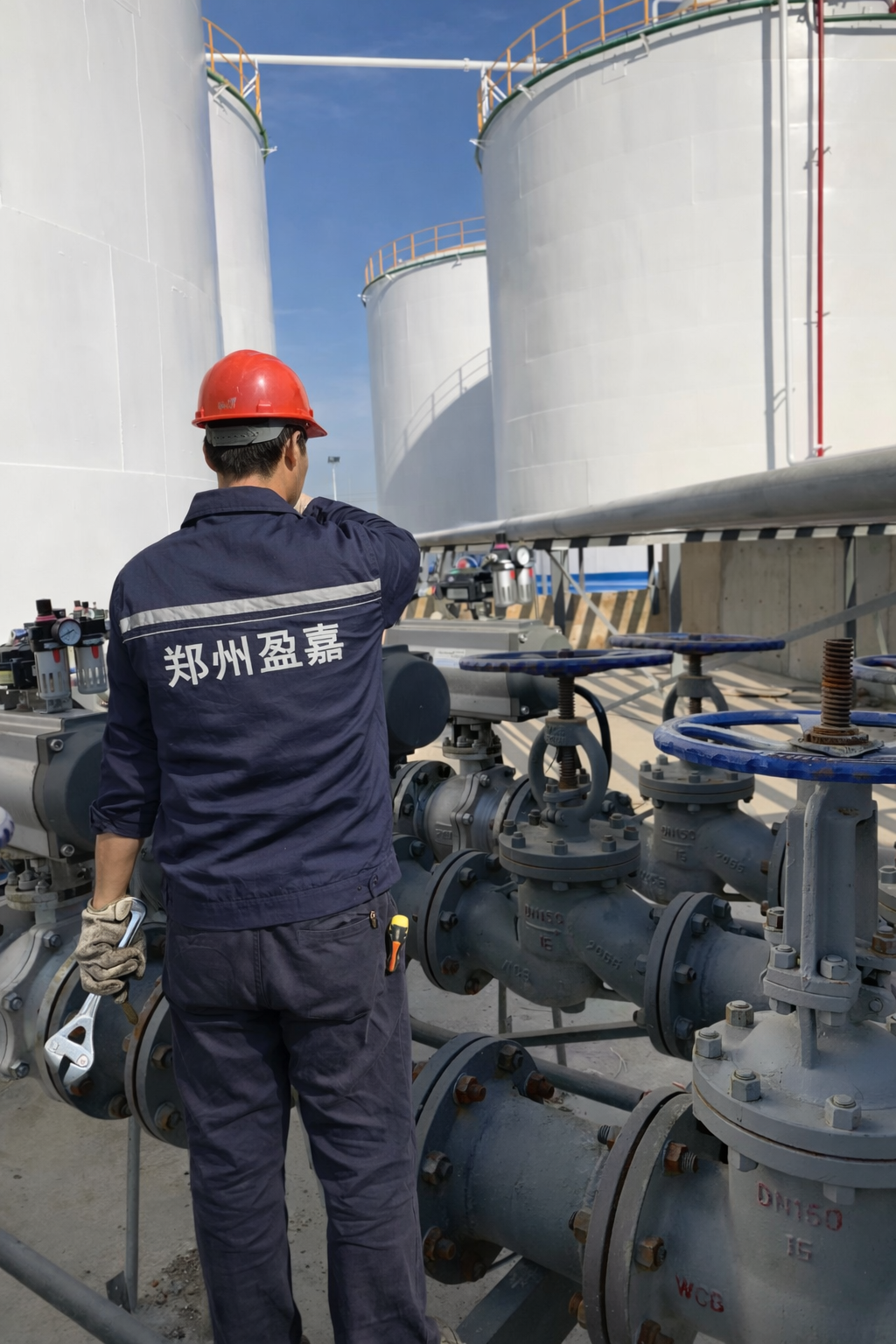
As energy infrastructure faces growing pressure from geopolitical instability, depot modernization is no longer just an option for future development. It is becoming a practical requirement for safer and more reliable operation today.
Zhengzhou Yingjia Petroleum Engineering Technology Co., Ltd. helps customers meet this challenge through professional automation and intelligent solutions for the petroleum storage and distribution industry.
With extensive experience in oil depot automation, loading control, safety integration, and intelligent terminal systems, Zhengzhou Yingjia supports the development of facilities that are better prepared for complex and high-pressure operating environments.
Zhengzhou Yingjia provides a comprehensive range of solutions designed to improve depot safety, control, and operational performance, including:
These solutions are designed not as isolated products, but as part of an integrated operating framework. By connecting storage, loading, control, monitoring, alarm response, and data management into a coordinated system, Zhengzhou Yingjia helps oil depots achieve stronger control across the full operational process.
For example, during truck or terminal loading operations, automation logic can coordinate key safety conditions such as grounding status, liquid level, valve position, flow condition, and emergency response signals. This helps reduce human error, improve consistency, and support safer operation under pressure.
At the monitoring level, centralized SCADA platforms provide a clearer operational picture by integrating process data, equipment condition, alarm information, and video visibility into one control environment.
At the management level, authorization controls, event records, and data traceability support disciplined operation and faster investigation when abnormal situations occur.
In stable times, weaknesses in depot design or management may remain hidden. In unstable times, they become exposed very quickly.
Delayed alarms, incomplete interlocks, disconnected systems, poor visibility, and excessive reliance on manual procedures can all increase operational risk when the external environment changes.
That is why more terminal operators and energy companies are investing in intelligent depot infrastructure. The value of automation is no longer measured by efficiency alone. It is measured by how well a facility can stay safe, controlled, and operational when the situation becomes more demanding.
As conflict continues to affect global energy networks, oil depots must be prepared to do more than support routine logistics. They must protect supply continuity, reduce operational risk, and maintain safe performance under uncertain conditions.
Zhengzhou Yingjia is committed to helping customers build oil depots that are not only more efficient, but also more resilient, more controllable, and better equipped for the future.
Because in today’s energy landscape, true operational strength is not defined only by capacity — it is defined by the ability to remain safe and reliable when it matters most.
Prev:Maximizing Safety and Efficien
Next:No Information
Copyright © Zhengzhou Yingjia Petroleum Engineering Technology Co., Ltd.
Tel: +86-13592665805 +86-13733868700 Whats App: 13733868700
Addr: No. 9 Changchun Road, High tech Development Zone, Zhengzhou City (450001)